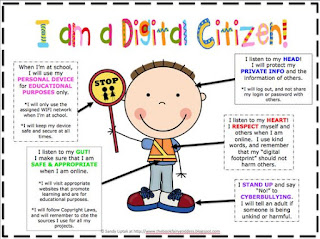
Teaching Digital Citizenship to Kindergarten Students As a career high school teacher, I am quite accustomed to teaching digital citizenship in Grades 9-12. I wanted more information on teaching to a much younger audience. Radical digital citizenship is "a process by which individuals and groups committed to social justice critically analyze the social, political and economic consequences of digital technologies in everyday life and collectively deliberate and take action to build alternative and emancipatory technologies and technological practices" (Emejulu & McGregor, 2016, p. 10). What does the preceding definition mean to a five-year old student? The web article refers to three main considerations for teacher. First, knowing how to handle strangers in virtual environments. Second, to convey that not all strangers are dangerous. Third, the danger might be in the home and hard to escape. What role do parents ta...
In Clark's 1983 article entitled, "Reconsidering Research on Learning from Media", he concludes "that media are delivery vehicles for instruction and do not directly influence learning". Look how far we have progressed since this dated statement. The article states that certain elements of media "might serve" as beneficial to student achievement. The Robert Kozma article from 1991 further details the effects of media types. Books, television, computers, and multimedia are discussed in relation to student learning. Although both articles are dated, Kozma states a point still in effect today. "Our ability to take advantage of the power of emerging technologies will depend on the creativity of designers, their ability to exploit the capabilities of the media, and our understanding of the relationship between these capabilities and learning". Humans, aka teachers, still need to critically decipher media in order find meaning and validity f...
PLN (Personal Learning Network) I view a PLN as a means for personal and professional connections. Whether it be LinkedIn or another like app, we can forge relationships with other via an online community. That digital community will share interests, passions, and beliefs from anywhere in the world. PLN’s bring people together to share ideas and resources. This course has reinforced the benefits of digital sharing. I appreciate engaging in professional conversations with others in my same profession. The link as below conveys ten benefits of online communities. The very nature of NET courses brings together students from all over the world, what a benefit unto itself. When we widen that geographic scope of conversation, we learn much more about our practices. The website link below outlines 10 benefits of online learning communities. I especially like Point 5 - A sense of community - whereby users develop a str...


Comments
Post a Comment